

Putting 20% down reduces the amount you need to borrow and in most cases removes private mortgage insurance (PMI) from a conventional mortgage. That lowers both the monthly housing cost and the

Dated: September 9 2026
Views: 66
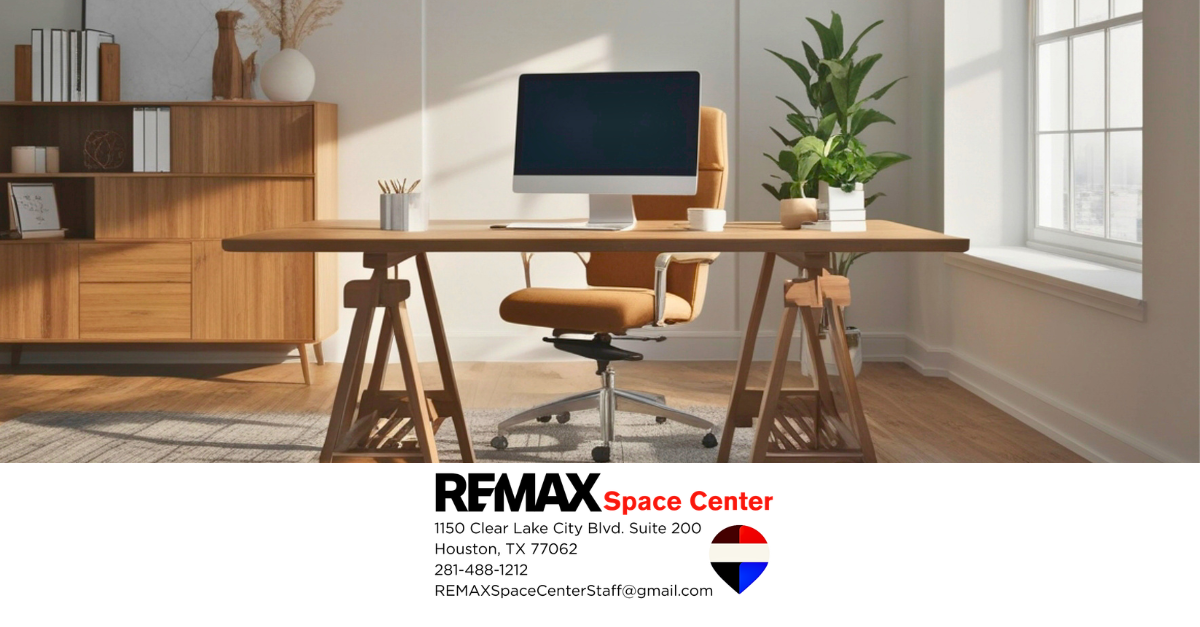
Learning how to create a study area comes down to four things: natural light, seating that holds up through long sessions, storage that keeps supplies contained and a spot where noise stays low. Those four matter more than square footage. A corner of a bedroom can outperform a dedicated office when the light is good and the clutter has somewhere to go.
The same four checks work while touring houses, because a floor plan either offers a workable study spot or it does not. Here is what each element does, and what to look for in a home before the school year starts.
Natural light reduces the eye strain that comes from staring at a screen under a single overhead fixture, and it makes a small space feel usable rather than boxed in. A desk positioned near a window gives the eyes something distant to focus on between tasks, which is part of the standard 20-20-20 guidance eye doctors give screen users.
Placement does most of the work. A desk set perpendicular to a window brings light across the work surface instead of straight into the screen, which cuts glare without giving up the view. North-facing windows deliver steady light through the day. South-facing windows deliver more of it but need a sheer shade or blind to stay comfortable in the afternoon.
Light is also the element that is hardest to add after the fact. Paint colors change in a weekend. Furniture gets swapped. Adding a window means cutting into structure, pulling permits and hiring a contractor. That is why window placement should be the first thing considered when picking the room, and why it belongs on a buyer’s list during showings.
Seating decides how long anyone actually stays in the study area. A chair that looks good and feels wrong after 20 minutes turns into a chair nobody uses, and the homework migrates back to the kitchen table. Support matters more than style.
For desk work, look for a seat height that lets feet rest flat on the floor with knees at roughly a 90 degree angle, and a back that meets the lower spine rather than curving away from it. Arms help during reading and tablet use by taking weight off the shoulders. An upholstered accent chair with a solid wood frame handles the reading half of studying well, while a task chair with adjustable height handles the typing half. Many households end up using both, with the desk chair for focused work and a softer seat nearby for reading.
Scale is the piece people miss. A deep lounge chair swallows a small room and pushes the desk into a corner. Measuring the chair footprint before buying keeps the walkway clear and keeps the room from feeling crowded.
Storage is what keeps a study area from turning back into a drop zone by October. Supplies multiply fast during the school year, and a surface covered in paper stops functioning as a work surface. The fix is giving every category a container and putting that container within arm’s reach of the desk.
Woven baskets do this well because they close the loop between function and appearance. A large basket handles blankets, backpacks and anything bulky. Smaller lidded boxes handle pens, chargers and calculators. Vertical storage adds capacity without taking floor space, so a wall shelf above the desk or a slim bookcase beside it clears the desktop for actual work.
A simple rule keeps the system running: anything used daily stays on the desk, anything used weekly goes in a basket or drawer and anything used a few times a year moves to a closet. Reviewing the setup at each grading period takes about ten minutes and prevents the slow creep of clutter that ends most homework stations.
Quiet is a design problem, not a luck problem. Sound travels through open sightlines and hard surfaces, so the goal is to break both. Position the desk so it faces away from the main traffic path through the house. Add soft material: a rug underfoot, curtains at the window and an upholstered chair all absorb sound that hard floors and bare walls bounce around.
Households often need two quiet zones rather than one. Kids need somewhere to study, and working parents need somewhere to take calls. Splitting them across floors or across the house keeps a video meeting from colliding with a math lesson. A spare bedroom, a wide landing, a finished basement corner or a section of a formal dining room that goes unused most of the year can all absorb the second zone.
The need is common. U.S. Census Bureau American Community Survey data puts the share of workers who worked from home at 13.3 percent in 2024, compared with 13.8 percent in 2023 and 5.7 percent in 2019. A home that can hold both a study area and a work area serves a wider range of households than one that can hold only a desk.
Study space is easy to evaluate on a showing once the four elements become a checklist. Walk each candidate room and check the following.
Sellers can work the same list in reverse. Staging a spare room as a defined study area gives buyers a use for a room that might otherwise read as leftover space, and it photographs well in listing images. A desk, a chair, a lamp and a shelf communicate function faster than an empty room does.
A REMAX Space Center agent can point out which floor plans in a given market tend to include flexible rooms, which neighborhoods have the internet infrastructure to support remote work and how a staged study area affects buyer response in that area. Connect with us to start the search.
#HoustonRealEstate#GalvestonRealEstate#REMAXSpaceCenter#HomeOffice
Blog Courtesy Of: REMAX.COM
Putting 20% down reduces the amount you need to borrow and in most cases removes private mortgage insurance (PMI) from a conventional mortgage. That lowers both the monthly housing cost and the
A house appraisal by a lender is a critical part of the home buying process for both buyers and sellers. A low appraisal can make or break your real estate deal, so you must know what goes into
Learning how to create a study area comes down to four things: natural light, seating that holds up through long sessions, storage that keeps supplies contained and a spot where noise stays low.
Luxury buyers do not need a listing to tell them a home is beautiful. They can see that. What they need is an honest reason to believe the property is worth the price. In luxury Texas real estate
The accuracy of all information, regardless of source, including but not limited to open house information, square footages and lot sizes, is deemed reliable but not guaranteed and should be personally verified through personal inspection by and/or with the appropriate professionals. The data contained herein is copyrighted by Houston Realtors Information Service, Inc. and is protected by all applicable copyright laws. Any unauthorized dissemination of this information is in violation of copyright laws and is strictly prohibited. Copyright 2026 Houston Association of REALTORS, Inc. All rights reserved. Last Update: September 22, 2026 10:28 PM UTC The information being provided by Houston Association of REALTORS, Inc. is for the consumer's personal, non-commercial use and may not be used for any purpose other than to identify prospective properties consumers may be interested in purchasing. Any information relating to real estate for sale referenced on this web site comes from the Internet Data Exchange (IDX) program of the Houston Association of REALTORS, Inc. This web site may reference real estate listing(s) held by a brokerage firm other
than the broker and/or agent who owns this web site.
The information being provided by Houston Association of REALTORS, Inc. is for the consumer's personal, non-commercial use and may not be used for any purpose other than to identify prospective properties consumers may be interested in purchasing. Any information relating to real estate for sale referenced on this web site comes from the Internet Data Exchange (IDX) program of the Houston Association of REALTORS, Inc. This web site may reference real estate listing(s) held by a brokerage firm other
than the broker and/or agent who owns this web site.
